
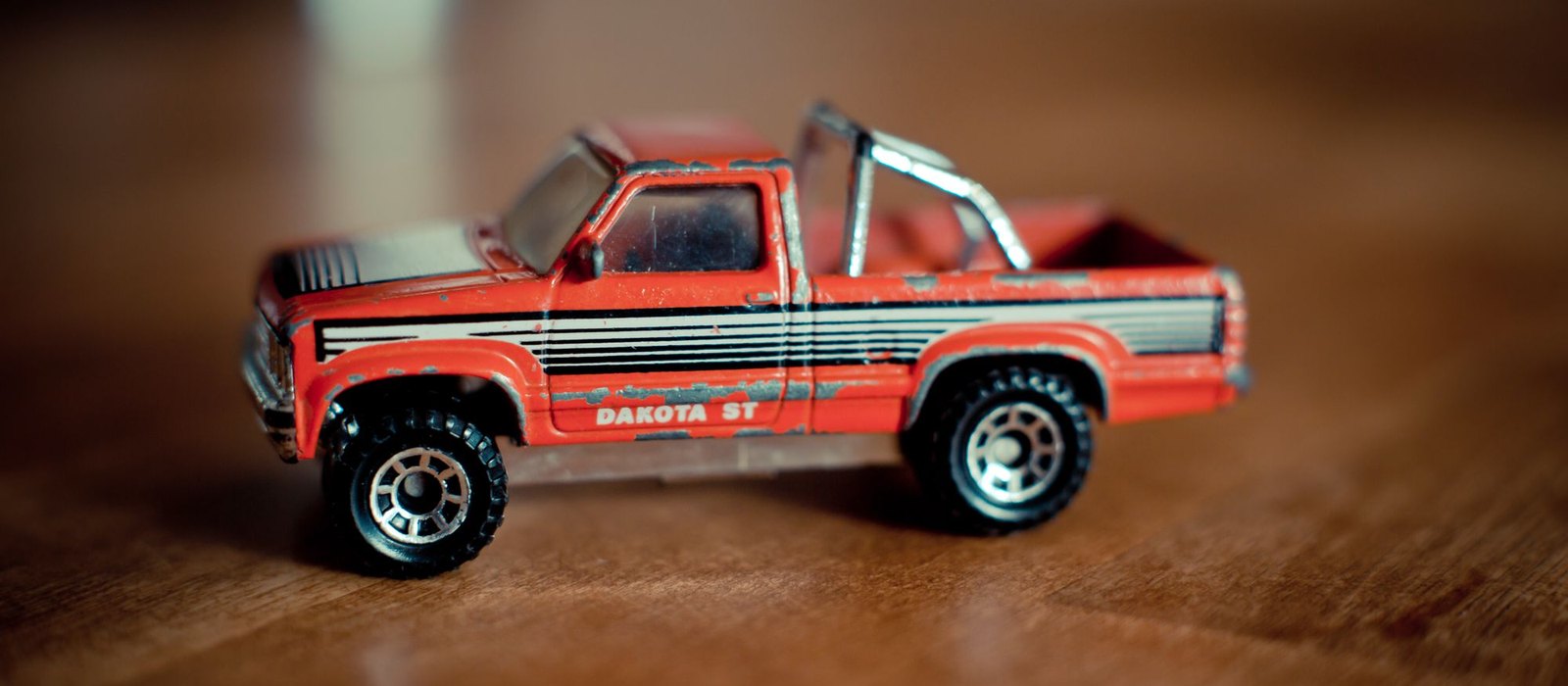
Your ute is probably a car
Under a tonne of load capacity and the tax law calls your ute a car, whatever is written on the tailgate. A Wildtrak is a car. A HiLux SR5 is a car. A D-Max is a car. An Amarok is a car. Of the nine dual cabs I ran through the calculator, only two cleared a tonne, and both were the cheaper Rangers.
That is the belief most business owners have back to front, and it is wrong on the claim that costs the most. A ute is not automatically a work vehicle. The badge decides nothing and the tray decides nothing. Three numbers on the compliance plate decide it.
Two questions, not one
The tool used to give a single verdict, which is why the wording never explained what any of it was worth. There are two separate tests and they can give opposite answers about the same vehicle.
Buying it is the one tonne test. Under a tonne of load capacity and it is a car, so the GST credit and the depreciation are both capped no matter what you paid. The 68 kg calculation has nothing to do with this one.
Driving it home is the 68 kg test in MT 2024. Pass it and private use can be exempt from fringe benefits tax. Fail it and every kilometre home is a fringe benefit.
A Ranger Wildtrak fails the first and passes the second. That is not a contradiction, it is two different provisions, and a single verdict gave you no way to see it.
Your numbers
If nothing changes as you type, the worked examples further down the page cover the same ground.
GST you can claim
$6,353
Read this before you use the number
This is general information, not advice about your purchase. It does the arithmetic on what you typed. It has not seen your invoice, your logbook, your entity or your accounts, and any of those can change the answer.
The invoice is what counts, not this page. Work from the actual tax invoice. It should show the GST separately, and on a vehicle over the threshold it should show the luxury car tax as well. If it does not, that is the first thing to sort out, because you cannot claim GST without a valid tax invoice.
On road costs are not in this calculation, and they are not GST free either. Stamp duty, registration and compulsory third party insurance are excluded here because they are not part of the luxury car tax value. They are still real money and they are treated differently again: stamp duty generally forms part of the cost of the vehicle for depreciation, while registration and insurance are usually ordinary running costs. Dealer delivery and accessories fitted before delivery normally do count. Get the invoice broken up properly.
Whether your vehicle is a car is a question of fact, not a choice. It turns on what the vehicle was designed to do, judged on its own specifications, not on what you use it for or what is written on the side of it. A dual cab can fall either way and it is worth ten minutes to check before you lodge.
Other things this does not know about. Whether the seller was registered for GST, which decides if there is any GST to claim at all on a private sale. Whether you are on a cash or accruals basis. Whether the vehicle attracts fringe benefits tax, which is a separate tax with separate rules. Whether you are in the small business depreciation rules. And whether luxury car tax was already paid earlier in the chain.
Figures are the ATO thresholds for the 2026 to 2027 year: the car limit is $69,883, the largest GST credit on a car is $6,353, and luxury car tax starts at $80,809, or $91,661 for a fuel efficient vehicle. Thresholds change on 1 July each year. If you are reading this in a later year, ring us rather than trusting the numbers on the screen.
Ring 02 6041 1687 and we will look at the actual invoice with you. That is a five minute job and it is worth doing before the BAS goes in, not after.
Not sure which one yours is? Work it out
The “car or commercial vehicle” question is not a matter of opinion. There is an arithmetic test, and you can run it yourself from three numbers printed on the compliance plate under the bonnet, or on your registration papers.
If nothing changes as you type, the worked example below shows the same calculation.
Passengers
340 kg
Left for goods
460 kg
Tipping point
On these numbers
Not principally for passengers
Passengers
Goods
The test comes from the ATO’s ruling MT 2024. Passenger carrying capacity is the number of seats, including the driver, multiplied by 68 kg. If that exceeds what is left of the load capacity, the vehicle is treated as designed principally for carrying passengers. A load capacity of one tonne or more clears it outright. Note that towing capacity is not part of this calculation: it uses GVM and kerb weight only.
Accessories count against you. A bull bar, canopy, toolboxes, drawers and a second battery all add to the weight of the vehicle and come straight off the load capacity. A ute that passed on the factory figures can fail once it is set up for work, which is exactly why this asks for your numbers rather than looking up a model.
MT 2024 is a fringe benefits tax ruling. The GST car limit exception uses similar wording and the same reasoning is applied in practice, but they are different provisions. This gives you a well founded answer to take to your accountant, not a final one to lodge on.
The rewritten result
Three utes, and the two tests above run over each of them. The first two are both Rangers and there are twenty kilograms between them.
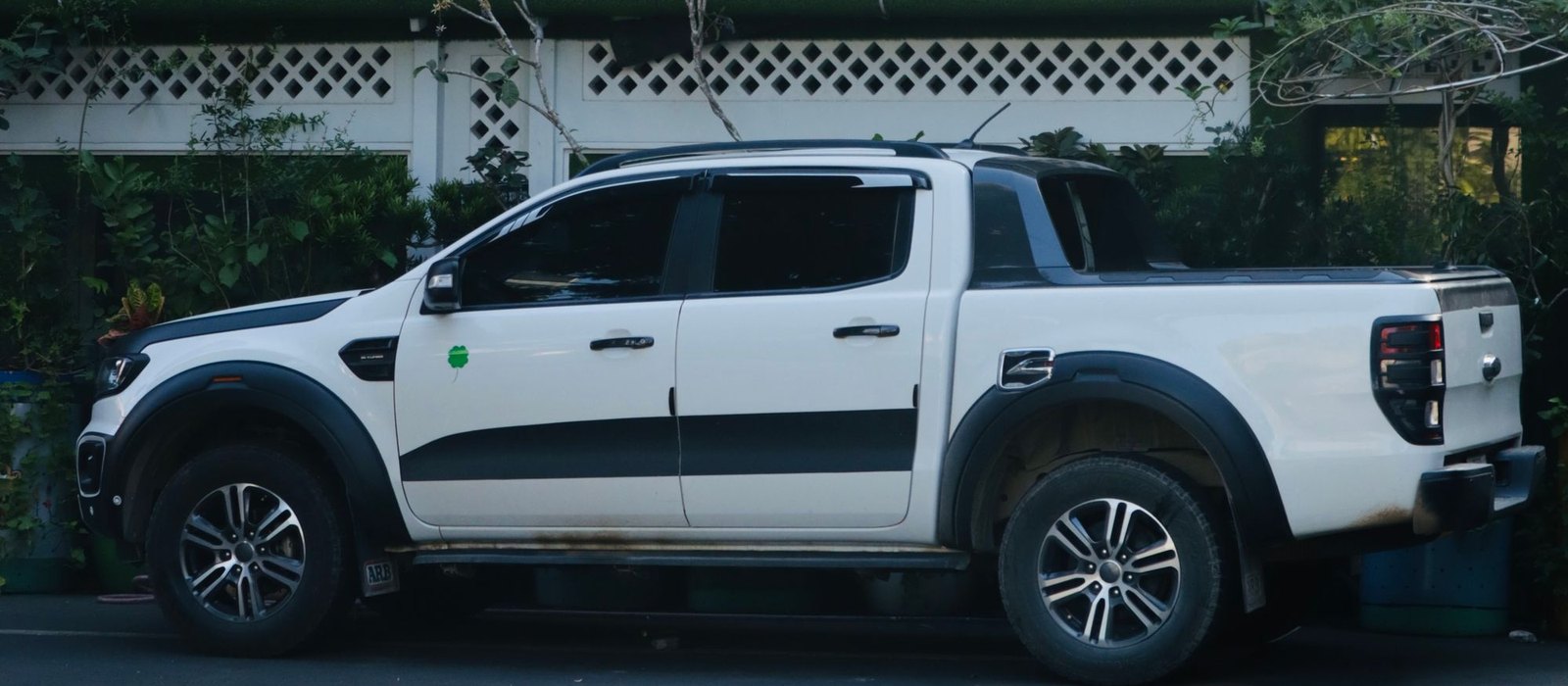
Ranger XLT 4×4 bi-turbo dual cab pickup
1,005 kg of load capacity
GVM 3,230 kg less kerb weight 2,225 kg. Five seats count as 340 kg. Those are the published figures for the vehicle as it left the factory, and the roller cover on this one would take a little of it back.
Buying it
It carries a tonne or more, so it is not a car under the tax definition and the car limit never applies.
On $80,000 you claim the full $7,273 of GST and depreciate $72,727.
Driving it home
A tonne or more clears the exemption outright, provided private use stays limited to travel between home and work plus the odd trip to the tip.
Ranger Wildtrak 2.0 bi-turbo dual cab
985 kg of load capacity
GVM 3,280 kg less kerb weight 2,295 kg. Twenty kilograms under the tonne.
Buying it
Under a tonne, so it is a car. The cap applies whatever the sticker said.
On $80,000 you claim $6,353 of GST, not $7,273, and depreciate $69,883, not $72,727. That twenty kilograms costs about $1,600.
Driving it home
The seats take 340 kg of the 985 kg, so goods have the majority and it is not designed principally to carry people. The exemption survives.
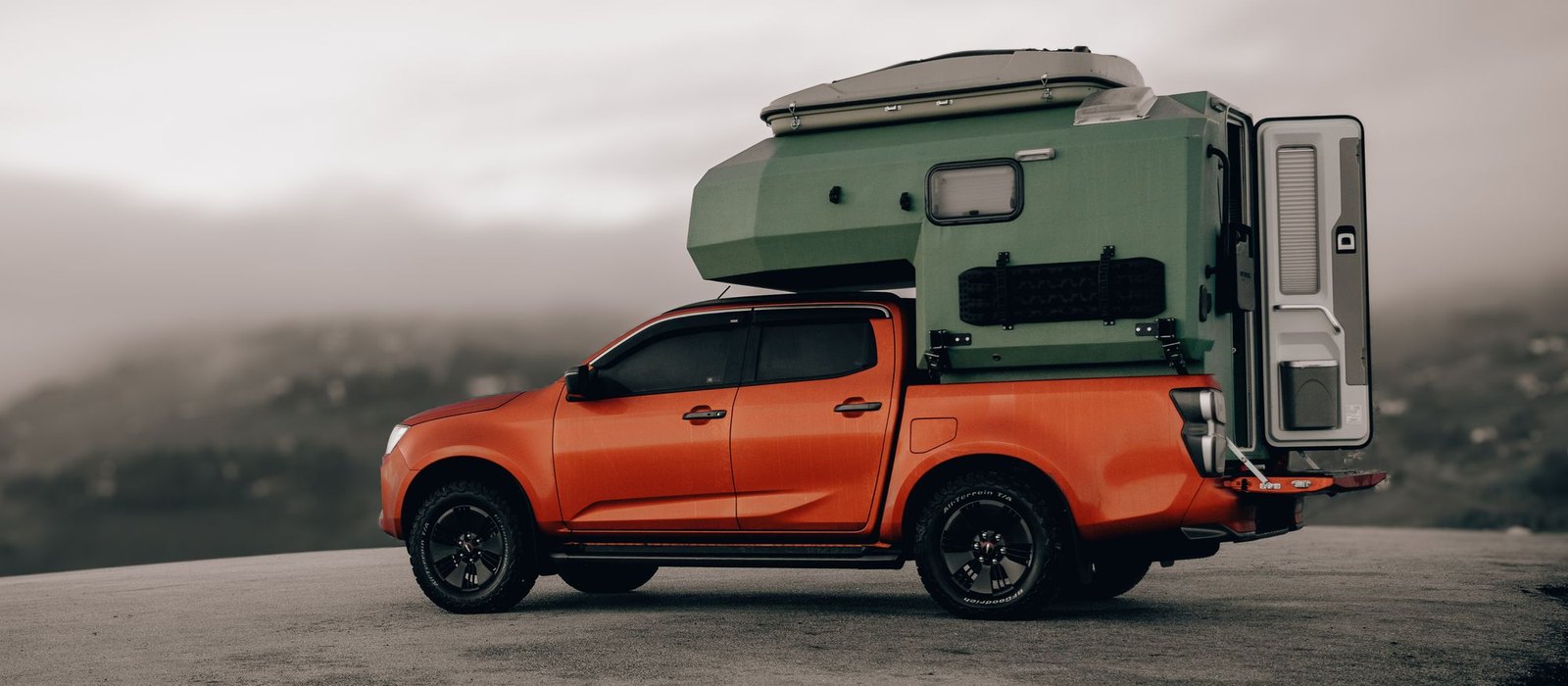
A dual cab carrying a slide-on camper
640 kg of load capacity
990 kg to start with, then a 350 kg slide on camper. MT 2024 paragraph 11 counts what is bolted on as part of the kerb weight.
Buying it
Well under a tonne, and it was under a tonne before the camper went on.
Capped at $6,353 of GST and $69,883 of depreciation, the same as the Wildtrak above.
Driving it home
340 kg of seats against 300 kg left for goods. Passengers now have the majority, so the vehicle is designed principally to carry people and the exemption is gone. Without the camper it had 990 kg and was comfortably clear.
On an $80,000 vehicle available for private use all year, FBT can reach roughly $15,600 a year before any employee contribution. That is the number worth protecting, and the camper is what put it at risk.
FBT figure is the statutory formula: 20% of the base value, grossed up at 2.0802, taxed at 47%. Employee contributions and days unavailable reduce it. General information only, not advice about your vehicle.
The calculator, run against real vehicles
Every row below was typed into the live tool and the verdict read back off the screen. The published GVM and kerb weights are cited underneath.
| Vehicle | GVM | Kerb | Load | Seats | Buying it | Driving it home |
|---|---|---|---|---|---|---|
| Ranger XL 4×4 bi-turbo dual cab pickup | 3,230 | 2,216 | 1,014 | 5 | Not a car | Exempt |
| Ranger XLT 4×4 bi-turbo dual cab pickup | 3,230 | 2,225 | 1,005 | 5 | Not a car | Exempt |
| Ranger Wildtrak 2.0 bi-turbo dual cab | 3,280 | 2,295 | 985 | 5 | A car | Exempt |
| Ranger Wildtrak 3.0 V6 dual cab | 3,350 | 2,353 | 997 | 5 | A car | Exempt |
| Ranger Raptor, kerb per carexpert | 3,130 | 2,431 | 699 | 5 | A car | Exempt, by 19 kg |
| Ranger Raptor, kerb per carsguide | 3,130 | 2,475 | 655 | 5 | A car | Not exempt, short 25 kg |
| HiLux SR5 double cab 4×4 | 3,050 | 2,100 | 950 | 5 | A car | Exempt |
| D-Max LS-U crew cab ute | 3,100 | 2,105 | 995 | 5 | A car | Exempt |
| Amarok TDI580 Aventura dual cab | 3,080 | 2,244 | 836 | 5 | A car | Exempt |
| Ranger XL single cab chassis 4×2 | 3,060 | 1,789 | 1,271 | 2 | Not a car | Exempt |
| Dual cab with a 350 kg slide on camper | 3,150 | 2,510 | 640 | 5 | A car | Not exempt |
| MT 2024 worked example, paragraph 17 | 2,000 | 1,400 | 600 | 5 | A car | Not exempt |
The last row is the ruling’s own example and the only one where the right answer is not open to argument. The tool returns the answer MT 2024 states, which is the test that matters.
Two more things the testing turned up
The table above is the evidence for the headline. Only the vehicles at or over a tonne escape the car limit, and in this field that is an XL and an XLT and nothing else.
The Raptor sits on the line, and published figures disagree about which side. carexpert lists a 2,431 kg kerb weight and carsguide lists 2,475 kg. One makes it exempt by 19 kg, the other loses the exemption by 25 kg. This is precisely why MT 2024 paragraph 11 points at the compliance plate rather than at a brochure.
The fit out is what moves people across the line. A steel tray, a canopy, a bull bar and a set of drawers runs to a few hundred kilograms, and a slide on camper more again. MT 2024 counts all of it in the kerb weight. A ute that was comfortably clear at 990 kg of load capacity loses the exemption once 350 kg of camper is bolted to it.
Where the numbers come from
GVM and kerb weight are both on the compliance plate, under the bonnet or inside the driver’s door frame. That is the source MT 2024 names, and it is the only one that reflects the options actually fitted to your vehicle. A brochure describes the vehicle as it left the factory.
Which ones fail, in one table
You do not need a list of models, because the test is arithmetic. To avoid being “principally for carrying passengers”, the load left for goods has to be at least as much as the load taken by seats. That gives a hard number for every seat count.
| Seats | Counted as passengers | Load capacity needed | Below that |
|---|---|---|---|
| 2, single cab | 136 kg | 272 kg | A car |
| 3, bench | 204 kg | 408 kg | A car |
| 4 | 272 kg | 544 kg | A car |
| 5 | 340 kg | 680 kg | A car |
| 6 | 408 kg | 816 kg | A car |
| 7 | 476 kg | 952 kg | A car |
A load capacity of one tonne or more clears the test outright whatever the seat count, so the row that matters in practice is the five seat one: a dual cab needs at least 680 kg of load capacity, and anything at or above 1,000 kg is fine regardless.
Why this catches good work utes
Plenty of popular dual cabs leave the factory somewhere between 700 kg and 1,100 kg of payload. That band sits right across the 680 kg line, which is why two utes parked next to each other on the same site can be treated differently.
Then the accessories go on. A steel bull bar, a canopy, a set of drawers, a second battery and a tow bar together can be 150 to 250 kg. A ute that left the dealer with 780 kg of payload can be under 680 kg by the time it is set up for work, and it becomes a car for these rules without anybody touching the paperwork.
That is the whole reason this page asks for your numbers rather than looking up your model. A lookup table would clear your neighbour’s ute and quietly get yours wrong.
Where to get the three numbers
All three are printed on the vehicle. You do not need the dealer and you do not need us.
- The compliance plate. A metal or foil plate, usually in the driver’s door jamb or under the bonnet in the engine bay. It carries the GVM.
- Your registration certificate. State authorities show GVM and tare on the rego papers, on paper or in your online account.
- The manufacturer’s spec sheet. Kerb weight is listed by variant. It has to be the variant you actually bought, because a 4×2 manual and a 4×4 auto are different vehicles for this purpose.
- Seats. Count them, including the driver’s.
The trap: tare is not kerb weight
Compliance plates and rego papers usually show tare, which is measured with about 10 litres of fuel in the tank. The ruling asks for basic kerb weight, which is the vehicle with a full tank, plus oil, coolant, spare wheel and tools.
On an 80 litre tank that is roughly 60 to 70 kg of difference, and it all comes off your load capacity. Use tare and you will overstate the payload and may clear a vehicle that does not actually pass. If all you have is tare, take the fuel off it before you use the number.
Questions
Does luxury car tax count?
No, and this catches people. You cannot claim a GST credit for luxury car tax, even on a vehicle used entirely for business. For 2026 to 2027 luxury car tax starts at $91,661 for a fuel efficient vehicle and $80,809 for everything else, so a well specified dual cab can be over it.
I bought it second hand from a bloke, not a dealer.
If the seller was not registered for GST there was no GST in the price, so there is nothing to claim. The purchase still goes on your books and still depreciates. Worth checking the invoice rather than assuming.
I financed it. Does that change the GST?
Not usually for the GST on the purchase, but how you record the repayments matters a great deal, and coding the whole repayment to an expense is one of the most common and most expensive mistakes we see in a trade file. Worth a conversation.
How do I prove the business use percentage?
A logbook, kept for a continuous twelve week period, is the standard way. If you have never kept one, start now rather than picking a number that feels about right.
What about fringe benefits tax?
Different tax, different rules, and a work vehicle can be caught by it even when the GST is fine. We have a separate piece on vehicles and FBT.
Buying something before 30 June?
The vehicle question is worth getting right before you sign, not after. Ten minutes on the phone can be worth a few thousand dollars either way.
Level 1, 561 Olive Street, Albury NSW 2640. Registered Tax Agent 20651000.