Short answer: some of it, and it turns on whether you were on duty and had to be there. Your golf club membership and ordinary sports clothes are out no matter what. The drive, the green fees and your own gear are all worth checking.
If Defence paid for it, stop here. Bussed to the course, kit issued, fees covered by the unit: there is nothing out of your pocket, so there is nothing to claim. That is the most common reason these claims fail, and it is worth checking before you read any further.
The ruling everyone quotes is gone
TR 95/17 set out what an ADF member could claim for thirty years, sport included. The ATO withdrew it on 19 June 2025, along with the old rulings for police, teachers and building workers, and nothing occupation specific replaced any of them. So this was not aimed at Defence. You’re now working off the general employee rules in TR 2020/1 and the ATO’s ADF guide, updated 11 May 2026. The guide kept the sport test. It dropped the worked examples that showed how it applied, which is why a lot of this now needs checking case by case.
Two things both have to be true
You have to be on duty while you’re playing. And one of these has to be true as well, in the ATO’s own words:
- you’re playing as an official ADF representative at an inter-service or combined-service competition, or
- you’re required to play as part of your normal duties, which is what a compulsory sports afternoon is.
A compulsory sports afternoon ticks the second one. Your Saturday game with the same team doesn’t. And being told to spend the money isn’t the test on its own. Picking golf off the list of sports on offer doesn’t count against you, and it doesn’t help you either.
What that’s actually worth
| What you spent it on | Can you claim it? |
|---|---|
| Getting there in your own car | Driving from base to the course while on duty is the strongest claim you have. A trip from home is a separate question, so check that one. 91 cents a kilometre for 2026-27, 88 cents for 2025-26, up to 5,000 km, or keep a logbook. |
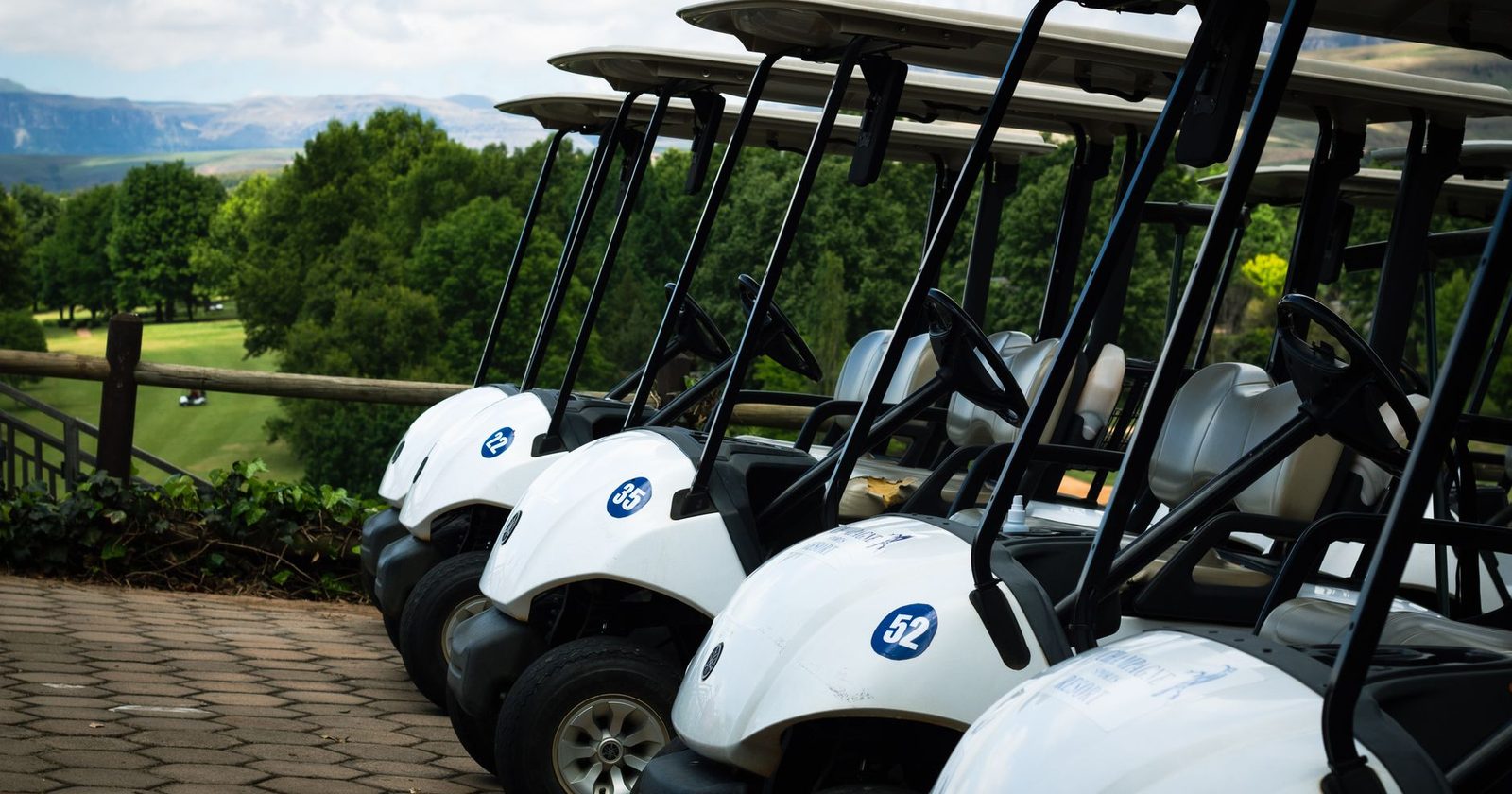
| Green fees and cart hire | Worth checking rather than assuming either way. If you paid them to take part in sport you were on duty for and had to attend, they can qualify. Keep the receipt and a note of the duty. |
| Cheap gear: balls, a glove, a rangefinder under $300 | You can only write it off in one go if you use it mainly for work. For golf gear that is rare, because most of it gets used on your own rounds. If it’s mainly private, it goes in the row below instead. |
| An expensive set of clubs, or a motorised buggy | Anything over $300 is claimed as decline in value over the life of the item, and only the work share. Be honest about that share. Four on duty afternoons against forty weekend rounds is about ten per cent, so on a $2,500 set that is a few dollars a year, not a few hundred. A matched set counts as one item too, so buying the irons one at a time doesn’t get you under $300 each. |
| Shirt, shorts, shoes | Never. They’re ordinary clothes, and a unit logo doesn’t turn them into a uniform. |
| Golf club membership | Blocked outright. Section 26-45 knocks out club fees no matter how work related they are. |
| Gym, to stay competitive | Private, unless you’re a PT instructor or in special forces and have to stay far fitter than the ADF standard. |
Work expenses are on the ATO’s focus list again this year. The claims that get pulled up are usually the ones that started out fine for the travel and then grew to cover everything else that happened that day.
Working out the work share
Count rounds, not hours. Divide the rounds you played on duty by all the rounds you played that year, and apply that percentage to the decline in value. Eight on duty out of fifty is sixteen per cent. Write the on duty ones down as you go, with the date, because a percentage worked out from memory in July is the one that gets knocked back.
Whether it’s worth the trouble is a fair question. Sixteen per cent of the decline on a $2,500 set is somewhere around fifty dollars a year. If you play the odd sports afternoon and that’s it, put the effort into the travel instead. That’s where the money actually is.
Two things that wipe it out
Defence paid for it. Bus provided, no travel claim. Reimbursed, nothing to deduct. This is the one that comes up most.
The pay it relates to is exempt. Part-time Reserve pay is exempt from tax, and so is pay under a Chief of the Defence Force certificate for eligible overseas duty, or foreign service of 91 days or more on deployment. You can’t claim costs against exempt pay. If you also earn taxable income, anything connected with that work is a separate question.
What to do instead
Log the trips properly
Date, where you drove from and to, the kilometres, and that you were on duty. Reconstructing it next July doesn’t work.
Show you were on duty
For representative sport, keep the selection paperwork and something showing you were on duty for it. Both matter, not just the selection.
Keep the receipts worth checking
Travel, fees and your own gear. Membership and ordinary sports clothes you can bin.
Related reading
- Tax deductions for ADF members, the full list: travel, uniforms, mess subscriptions, tools and self-education.
- Claiming home office expenses, if you do course work or admin at home.
- Truck driver tax deductions, the same treatment for another job with its own travel rules.
About this article. Written by the tax team at Business Edge Advisors, Registered Tax Agent 20651000. Sources: the ATO’s ADF members guide, TR 95/17 and its withdrawal notice, TR 2020/1, TR 2021/1, and sections 26-45 and 51-5 ITAA 1997. Last reviewed 29 September 2026.
Not sure which side of the line you’re on?
Tell us what you were doing, whether you were on duty, where you drove from and who paid. That’s usually enough for us to say straight out what belongs in the return. We lodge returns for Defence members and their families across Albury and Wodonga.